

How Often Should Gutters Be Cleaned in Hilton Head Island Because of Moss, Oak Tassels, and Storms?
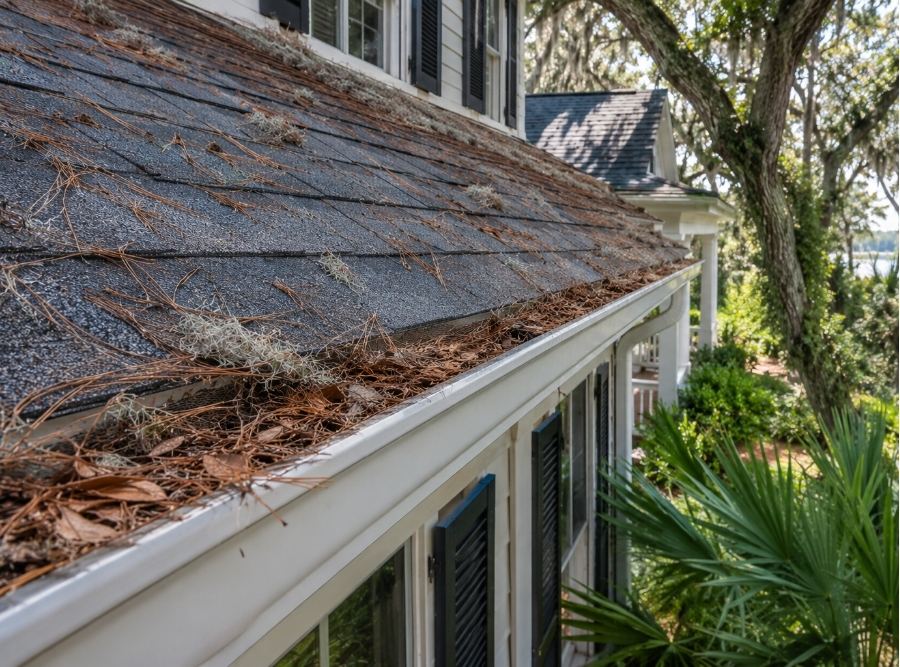
Most Hilton Head Island homes should have gutters cleaned at least twice a year, but homes under mature live oaks, pine trees, heavy shade, or storm-exposed rooflines may need cleaning three to four times per year. Oak tassels, moss, pine needles, coastal humidity, and summer storms can clog gutters faster than a standard annual cleaning schedule can handle.
Gutters on Hilton Head Island do not deal with a simple fall leaf season and then stay clear the rest of the year. The island’s tree canopy, coastal humidity, frequent thunderstorms, and long growing season create a much more active debris cycle. Live oaks shed leaves and tassels, pine needles accumulate steadily, storms wash roof debris into gutters, and shaded areas can hold enough moisture for moss and organic buildup to develop.
That is why many homeowners feel like their gutters are full again shortly after cleaning. In neighborhoods such as Sea Pines, Palmetto Dunes, Shipyard, Hilton Head Plantation, Port Royal Plantation, Long Cove, and Forest Beach, mature trees are part of the character of the property. They also make gutter maintenance more important than it would be on a newer open lot with limited canopy coverage.
The right cleaning schedule depends on tree coverage, roof design, gutter condition, downspout layout, and whether the property is occupied year-round or seasonally. A home beneath live oaks and pines may need a very different maintenance plan than a home with an open roofline and fewer trees nearby. The goal is not simply keeping gutters looking clean. The goal is keeping rainwater moving safely away from the home before debris turns into overflow, fascia damage, landscape erosion, or moisture problems around the foundation.
Why Hilton Head Gutters Clog Faster Than Homeowners Expect
One of the biggest mistakes homeowners make is following a generic national recommendation that says gutters should be cleaned once or twice a year. That advice may work in areas with predictable seasonal leaf drop, but Hilton Head Island has a more demanding environment. Tree debris does not arrive in one clean wave. It shows up in different forms throughout the year, and each type of debris creates a different kind of drainage problem.
Oak tassels are one of the most frustrating examples. During spring, live oaks release stringy tassels that can collect quickly inside gutters and around downspout outlets. These tassels do not behave like ordinary leaves. They can form dense mats that trap pollen, roof grit, pine needles, and smaller organic material. Once wet, they become heavier and more compact, which reduces water flow and can create blockages faster than homeowners expect.
Moss and organic sludge create a different issue. In shaded areas, especially under mature tree canopies, gutters may stay damp long after rain has stopped. Coastal humidity slows the drying process, and that moisture allows decomposing material to build up inside the gutter. Over time, the debris becomes less like leaves and more like a thick organic layer that slows drainage, holds water, and adds unnecessary weight to the system.
Storms make everything worse because they move debris all at once. A gutter may look manageable before a summer thunderstorm, then become packed after wind and heavy rain wash pine needles, oak debris, moss, and roof material into one section. This is why homeowners often say, “I just had them cleaned,” even though the gutters are overflowing again. The issue is not always neglect. Sometimes the property simply has a high debris load and needs a more realistic maintenance schedule.
Why Once-a-Year Cleaning Is Often Not Enough
Annual gutter cleaning may be enough for a low-debris property, but many Hilton Head homes need more attention. Homes under mature live oaks, pine trees, or shaded rooflines usually collect debris too quickly for one cleaning per year to keep the system working properly. By the time the annual cleaning comes around, downspouts may already be partially clogged, gutters may be holding standing water, and overflow may already have affected fascia, siding, or landscaping.
The problem with waiting too long is that gutters do not need to be completely packed to fail. A partial blockage at the downspout outlet can be enough to slow drainage during heavy rain. A low spot filled with wet oak tassels can hold water in one section of the gutter. A layer of moss and decomposed organic material can reduce capacity even when the gutter does not appear full from the ground.
This is especially important before hurricane season and during the summer storm cycle. Hilton Head homes are exposed to frequent downpours, wind-driven rain, and tropical systems that can push a marginal gutter system past its limit. If the gutters are already partially restricted when heavy rain arrives, overflow becomes much more likely.
For many properties, a better starting point is a spring cleaning after oak tassel drop and a late summer or early fall cleaning before peak tropical weather. Homes under heavier tree coverage may need an additional cleaning after major storm periods or during late fall when accumulated debris has built up again. The frequency should be based on what the gutters actually collect, not a fixed calendar rule that ignores the property’s environment.
What Moss, Oak Tassels, and Storm Debris Actually Do Inside Gutters
Homeowners often think of gutter cleaning as removing visible leaves, but the more serious problem is usually what happens after debris begins breaking down. Moss, oak tassels, pine needles, pollen, and roof grit can combine into a dense layer that behaves almost like a sponge. It holds moisture, slows water flow, and gives new debris something to stick to.
Oak tassels are particularly good at creating blockages because they wrap around downspout openings and collect other material. Even if the gutter trough still has open space, the outlet may be restricted. During light rain, water may still drain slowly enough that the problem goes unnoticed. During a hard storm, the restricted outlet cannot move water out fast enough, and the gutter overflows.
Moss adds weight and moisture retention. A small amount of moss along the gutter edge may look harmless, but it usually indicates a damp environment where organic material is staying wet too long. When moss spreads inside a gutter or around guard surfaces, it can slow drainage and contribute to standing water. Over time, that standing water can strain hangers, expose fascia boards to moisture, and make debris accumulation worse.
Storm debris changes the situation quickly. Wind can push branches, pine straw, leaves, and roof debris into valleys and gutter runs within a single weather event. This is why homes may need inspection after major storms even if they were cleaned recently. Hilton Head’s weather does not always allow gutters to stay clean for a predictable number of months.
The Common Misconception About Gutter Guards
One of the most common misconceptions is that gutter guards eliminate cleaning. They can reduce how much debris enters the gutter, but they do not eliminate maintenance, especially on Hilton Head Island. Pine needles, oak tassels, moss, pollen, and decomposed organic material can still collect on top of guard surfaces, around seams, and near roof valleys.
A good gutter guard system can be valuable when it is matched to the home’s debris load. Micro-mesh guards, for example, can help prevent pine needles and smaller debris from entering the gutter trough. However, debris that stays on top of the guard still has to be monitored. If enough material accumulates on the surface, water may slow down, overshoot the gutter, or run over the front edge during heavy rain.
During inspections, we often find that homeowners with guards assume the gutters are protected because they cannot see inside them. That can be misleading. A gutter guard may keep the inside of the trough cleaner while still needing surface maintenance. If oak tassels and moss form a mat on top of the system, the guard can become part of the drainage restriction rather than a complete solution.
The best way to think about gutter guards is that they reduce maintenance, not remove it. Homes beneath mature live oaks and pines still need inspections, and the cleaning schedule may shift from cleaning inside the gutters to clearing guard surfaces, roof valleys, and downspout outlets. The water still has to enter the system and exit freely.
What We Commonly See on Hilton Head Homes
On Hilton Head Island, gutter cleaning needs can vary dramatically from one property to the next. A home in an open section of Indigo Run may stay clear longer than a shaded home in Sea Pines with live oaks hanging over the roofline. A rental property near Forest Beach may go unnoticed between guest stays until overflow becomes visible. A full-time resident in Hilton Head Plantation may notice slow drainage earlier because they see the home during storms.
One common pattern we see is gutters that look mostly clear from the ground but have downspout outlets packed with oak tassels and pine needles. The homeowner assumes the gutter is fine because there is no obvious pile of leaves hanging over the edge. Then a heavy rain comes through, water fills the gutter, and overflow appears near corners or downspouts. The problem was already developing, but it was hidden at the outlet.
Another common issue is shaded gutter runs that never dry completely. These sections often hold moss, sludge, and decomposed debris even after the more visible leaves are removed. If cleaning only removes the top layer of debris but leaves the wet organic material behind, the gutter may clog again quickly. Proper cleaning should restore water flow, not just improve appearance.
Vacation homes and seasonal residences are especially vulnerable because problems can develop while no one is present. A gutter may overflow several times before the owner returns. By then, there may already be staining on siding, washed-out landscaping, or moisture exposure around fascia and soffits. For these properties, scheduled maintenance is usually safer than waiting for visible symptoms.
A Practical Cleaning Schedule for Hilton Head Island Homes
For many Hilton Head homes, twice-a-year cleaning is the minimum. A spring cleaning is important because live oak tassels and seasonal debris can quickly collect in gutters and downspout outlets. A second cleaning before or during the late summer and fall storm season helps prepare the system for tropical rainfall, wind-driven debris, and heavier runoff.
Homes under mature live oaks, pine trees, or shaded rooflines may need cleaning three or four times per year. These properties collect debris continuously, and waiting six months between cleanings may allow organic material to compact into sludge. If the gutters are visibly full from the ground, if moss is growing near the edge, or if water is overflowing during moderate rain, the schedule is not frequent enough.
Storm-related cleaning is also important. After a major thunderstorm, tropical system, or strong wind event, gutters should be checked if the property has heavy tree coverage or a history of overflow. This does not always mean a full cleaning is needed, but it does mean downspouts, roof valleys, and problem sections should be inspected.
A good maintenance schedule should be based on the property’s actual behavior. If gutters remain clear and drain well between cleanings, twice a year may be enough. If the same sections fill repeatedly, if downspouts drain slowly, or if moss returns quickly, the home needs a more frequent plan.
Why Delayed Cleaning Costs More Than Routine Maintenance
Gutter cleaning is easy to underestimate because the damage from clogged gutters often develops slowly. The first signs may be minor overflow, dark streaks on the gutter face, or water dripping after rain has stopped. Over time, the problems become more serious. Standing water adds weight to the gutter system, downspouts become restricted, and overflow begins reaching areas that should stay dry.
When water spills over the gutter edge, it can soak fascia boards, stain siding, erode landscaping, and pool near foundations or walkways. In Hilton Head’s humid climate, damp wood and trapped organic debris can also encourage rot, pest activity, and biological growth. A gutter full of wet moss, oak tassels, pine needles, and decomposed debris is not just messy. It is a moisture problem sitting along the roofline.
The cost escalation is usually what surprises homeowners. A routine cleaning is minor compared with fascia repair, soffit replacement, gutter realignment, landscape restoration, or water intrusion repairs. By the time the gutter is sagging or pulling away, the issue has often moved beyond cleaning and into structural maintenance.
This is why the right schedule matters. Cleaning gutters before they fail is less expensive and less disruptive than repairing the damage caused by repeated overflow. In a place like Hilton Head, where storms and tree debris are part of normal life, preventative maintenance is the more practical approach.
The Right Cleaning Frequency Depends on the Home
There is no single schedule that fits every Hilton Head property. A home with minimal tree cover may do well with two cleanings per year. A shaded property beneath mature live oaks and pines may need service every three to four months. A vacation rental or seasonal home may need scheduled inspections because no one is there to notice early warning signs during storms.
The most important thing is to watch how the system behaves. If water pours over the edge, if downspouts drain slowly, if moss is visible, or if oak tassels collect near the gutter lip, the gutters need attention. If the same areas clog repeatedly, the issue may involve roof valleys, poor pitch, downspout placement, or gutter guards that are not handling the debris load properly.
Hilton Head gutters are not just dealing with leaves. They are dealing with moss, oak tassels, pine needles, humidity, storms, and long periods of organic buildup. A cleaning schedule should reflect that reality.
Keeping gutters clean is ultimately about protecting the home from water. When gutters move rainwater properly, they help protect fascia, soffits, siding, landscaping, walkways, and foundation areas. When they clog, that water goes wherever gravity takes it. On Hilton Head Island, where storms can arrive quickly and debris builds up year-round, regular gutter cleaning is one of the simplest ways to prevent much larger problems.

Helder is the owner of GutterXperts, a family-owned seamless gutter company serving Bluffton, Hardeeville, Hilton Head Island, and the surrounding Lowcountry. He personally inspects every completed installation, and the team fabricates each gutter run on-site to match the exact roofline rather than using pre-cut sections. GutterXperts is licensed in South Carolina and Georgia and has served more than 500 homes throughout the region.