

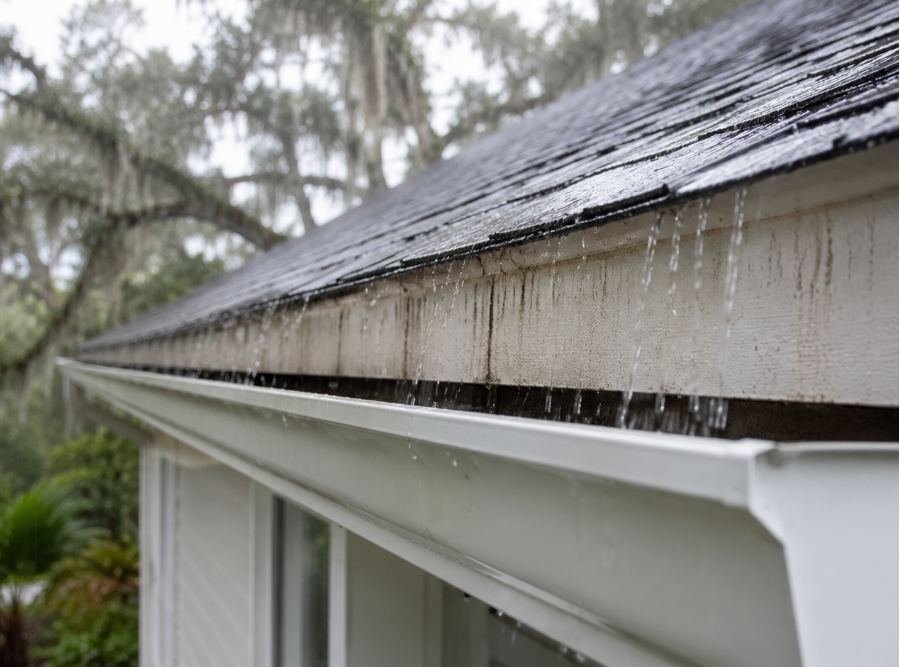
How Do You Fix Rain Water Leaking Behind the Gutter Instead of Flowing Into It?
Rainwater leaking behind the gutter is usually fixed by correcting the roof-edge water path, not by simply sealing the gutter. The cause may be missing or improper drip edge flashing, gutters installed too low or too far from the roof edge, poor gutter pitch, debris buildup, or roof runoff overwhelming certain sections during heavy rain.
Water running behind a gutter is one of those problems homeowners often misread at first. It can look like the gutter is leaking, the roof is leaking, or the siding is somehow letting water through. In many cases, the real issue is that roof runoff is bypassing the gutter entirely and traveling down the fascia board instead of dropping cleanly into the gutter channel.
In Bluffton, this problem often shows up during heavy thunderstorms, wind-driven rain, and tropical-season downpours. A gutter may look fine on a dry day, but once rain starts moving quickly off the roof, water finds the easiest path. If the roof edge, drip edge, gutter position, or drainage capacity is not right, that path may be behind the gutter instead of inside it.
The Water Is Not Always Coming From Where It Looks Like It Is
One of the first things to understand is that water behind the gutter does not always mean the gutter itself has a hole. Homeowners often describe the problem as a leaking gutter because water is visible near the gutter line, but the actual failure may be happening above or behind the system. Rainwater can curl around the edge of shingles, slip behind the gutter, and run down the fascia before it ever has a chance to enter the gutter.
This is why caulking random gaps rarely solves the issue. Sealant may temporarily slow a drip, but it does not correct the path water is following from the roof into the drainage system. If water is bypassing the gutter because of missing drip edge flashing or poor gutter placement, the fix has to address that roof-edge detail. Otherwise, the same section will continue getting wet every time the roof sheds water.
A proper inspection looks at how water leaves the roof, where it drops, whether the gutter is positioned under the drip line, and whether the fascia is being protected. The goal is not simply to stop a visible drip. The goal is to make sure runoff is being collected before it reaches the wood behind the gutter.
Missing or Poorly Installed Drip Edge Is a Common Cause
Drip edge flashing is designed to help guide water off the roof edge and into the gutter. When it is missing, too short, bent incorrectly, or installed in a way that does not direct runoff properly, water can follow the underside of the roof edge and run behind the gutter. This often creates dark stains on the fascia, peeling paint, wet wood, and eventually rot.
Older homes in Bluffton and throughout the Lowcountry are more likely to have roof-edge details that do not perform as well as they should. Some homes may lack modern drip edge flashing altogether, while others may have flashing that does not extend far enough into the gutter. Previous roof or gutter repairs can also create alignment issues if the roof edge and gutter system were not considered together.
When drip edge is the problem, cleaning the gutter will not fully correct it. The gutter may be empty and still fail to catch the water because the roof runoff is not being directed into it. In these situations, the repair may involve installing or correcting drip edge flashing, adding a proper gutter apron, or adjusting the gutter position so the water has a clean path into the system.
Gutter Placement Can Make a Good System Perform Poorly
Even a quality gutter can fail if it is installed in the wrong position. If the gutter sits too low, too far forward, or too far away from the roof edge, fast-moving water can overshoot or slip behind it. This is especially noticeable below roof valleys, steep roof sections, or large areas where a lot of runoff concentrates in one place.
Bluffton storms make these placement issues easier to see. During light rain, the gutter may appear to work normally. During a heavy afternoon downpour, water volume increases quickly and exposes any weakness in the gutter’s position. Homeowners often describe this as rain “missing the gutter,” which is usually a sign that the gutter needs to be repositioned or that additional roof-edge protection is needed.
Correcting placement is not just about moving the gutter closer to the house. The gutter has to sit where it can catch the roof’s drip line while still maintaining proper pitch toward the downspouts. If it is adjusted without considering drainage slope, the repair can create standing water or overflow in another section.
Overflow and Bypass Are Not the Same Problem
A common mistake is treating every water-behind-the-gutter issue as a clog. Debris can absolutely cause overflow, especially on properties with live oaks, pine straw, and heavy tree coverage. When gutters fill with debris, water may rise and spill over the back edge, soaking the fascia. In that case, cleaning the gutter and downspouts may restore proper flow.
But overflow and bypass are different problems. Overflow happens when water enters the gutter but cannot drain fast enough. Bypass happens when water never enters the gutter correctly in the first place. The symptoms may look similar from the ground, but the repairs are different.
This distinction matters because many homeowners spend money on repeated gutter cleanings without fixing the real issue. If the gutters are clean and water still runs behind them, the cause is likely related to drip edge, gutter placement, roof-edge alignment, pitch, or runoff volume. A good inspection should determine whether the water is overflowing from inside the gutter or bypassing the system from above.
Why This Problem Damages Fascia Boards So Quickly
Water leaking behind the gutter is especially concerning because it repeatedly wets the fascia board. The fascia is the wood surface that supports the gutter system, and it is not meant to stay damp after every rain. When water runs behind the gutter, it can soak the fascia, work behind paint, and create the conditions for rot.
At first, the warning signs may be subtle. Paint begins to bubble, dark streaks appear under the roof edge, or the wood looks damp longer than it should after rain. Over time, the fascia can soften and lose its ability to hold gutter fasteners securely. Once that happens, the gutter may begin pulling away from the house, which makes the water problem even worse.
In Bluffton’s humid climate, damp wood may not dry quickly. Homes shaded by mature trees in areas such as Old Town Bluffton, Rose Hill, Moss Creek, Belfair, Hampton Lake, and Palmetto Bluff can be especially vulnerable because shade and debris keep roof-edge areas wet longer. What starts as a drainage alignment issue can eventually become a wood repair problem if it is ignored.
Heavy Rain Can Reveal an Undersized or Overloaded Gutter System
Sometimes water runs behind or over a gutter because the system cannot handle the amount of runoff coming from the roof. Large roof sections, steep pitches, and roof valleys can send heavy water volume into a short section of gutter. If the gutter is undersized, pitched poorly, or served by too few downspouts, water may overwhelm the system during intense storms.
This is common in the Lowcountry because rainfall can shift from light to extremely heavy in a short period of time. A gutter that performs acceptably during ordinary rain may fail during the type of storm that actually tests the system. If water only bypasses the gutter during heavy downpours, the solution may involve improving capacity rather than simply sealing or repositioning one area.
In some cases, this means adding downspout capacity, correcting pitch, installing splash guards in high-volume areas, or upgrading the gutter size where roof runoff demands it. The best fix depends on whether water is missing the gutter, backing up inside it, or arriving faster than the system can discharge it.
The Right Repair Starts With Watching How Water Moves
The best way to diagnose water leaking behind the gutter is to understand what happens during actual rainfall. A dry inspection can reveal missing drip edge, poor alignment, sagging sections, and fascia staining, but water behavior often confirms the real source. Watching where runoff leaves the roof, where it enters or misses the gutter, and how quickly it exits through the downspouts provides the clearest picture.
A proper repair may be as simple as cleaning the system if debris is causing backside overflow. It may require adjusting the gutter height or position if runoff is bypassing the trough. It may require installing or correcting drip edge flashing if water is curling behind the gutter at the roof edge. If the system is undersized or poorly pitched, a more complete drainage correction may be needed.
This is why the repair should not begin with assumptions. The same visible symptom can come from several different causes. The fix that works is the one that corrects the path of the water from the roof to the gutter to the downspout.
Stopping the Leak Before It Becomes a Wood Damage Problem
Water behind the gutter should not be treated as a minor nuisance. Every time rain runs down the fascia instead of into the gutter, the home’s roof edge is being exposed to moisture it was not designed to handle. Over time, that can lead to peeling paint, rotten fascia, soffit deterioration, loose gutters, and larger repair costs.
For homeowners in Bluffton, Hilton Head Island, Okatie, Hardeeville, and surrounding Lowcountry communities, this issue is worth addressing early. The repair may be straightforward if the problem is caught before the fascia deteriorates. Once the wood softens or the gutter begins pulling away, the project can become more involved.
If rainwater is leaking behind your gutter instead of flowing into it, the most important step is identifying whether the issue is debris, drip edge, gutter placement, pitch, or capacity. Once the source is clear, the gutter system can be corrected so water moves where it belongs: off the roof, into the gutter, through the downspouts, and safely away from the home.

Helder is the owner of GutterXperts, a family-owned seamless gutter company serving Bluffton, Hardeeville, Hilton Head Island, and the surrounding Lowcountry. He personally inspects every completed installation, and the team fabricates each gutter run on-site to match the exact roofline rather than using pre-cut sections. GutterXperts is licensed in South Carolina and Georgia and has served more than 500 homes throughout the region.