

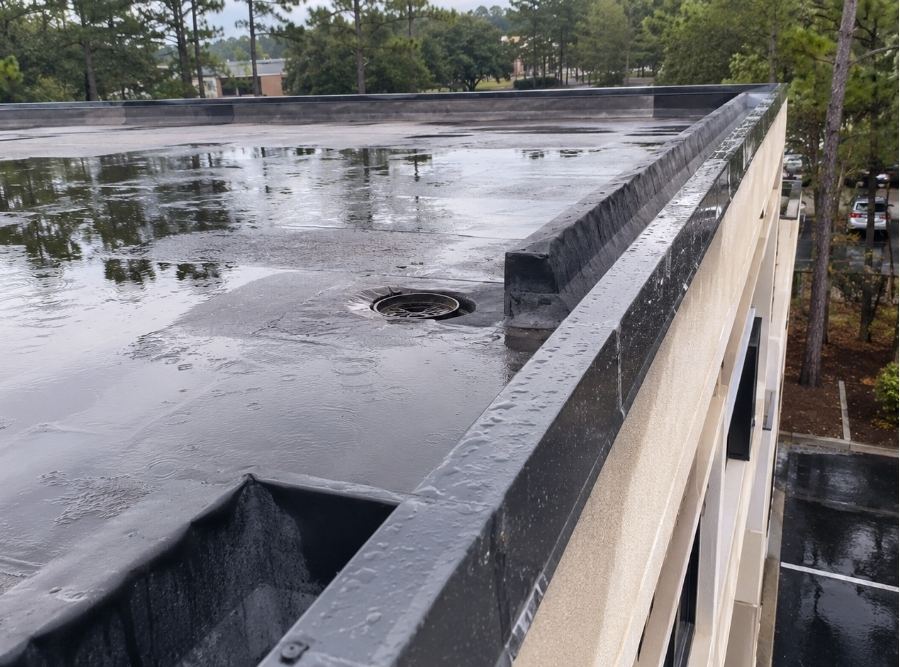
How Do You Fix a Leaking Box Gutter on a Commercial Building Roof?
A leaking box gutter on a commercial building is fixed by first identifying whether the problem is caused by blockage, standing water, failed seams, deteriorated lining, damaged flashing, or inadequate drainage capacity. The repair may involve clearing roof drains, restoring seams, repairing or replacing the gutter liner, correcting flashing details, improving overflow protection, or redesigning the drainage path so water no longer backs up into the building.
A commercial roof leak is not always a roof membrane problem. In many buildings, especially warehouses, retail centers, office buildings, and low-slope roof systems, the source is often the box gutter or internal drainage system. These gutters are designed to collect and move large volumes of roof runoff, but when they clog, corrode, separate at seams, or lose proper drainage flow, water can back up quickly and find its way into walls, ceilings, insulation, and occupied spaces.
This type of leak becomes especially urgent in the Bluffton and Lowcountry area, where heavy rainfall, tropical systems, wind-driven debris, humidity, and coastal corrosion can expose weaknesses in commercial drainage systems. A small ceiling stain near an exterior wall may be the first sign, but the real issue may be a failing gutter liner, blocked drain, deteriorated flashing, or overflow condition on the roof. Fixing the problem correctly requires more than applying sealant where water appears inside the building. It requires understanding how the roof, gutter, drains, scuppers, parapet walls, and flashing are working together.
The Leak Usually Starts With Water That Cannot Leave Fast Enough
A box gutter is supposed to collect roof runoff and move it safely toward drains, scuppers, collector boxes, or designated discharge points. When that flow is interrupted, water begins sitting in places it was never meant to remain. On a commercial building, even a small restriction can become a major problem because large roof surfaces generate significant runoff during a heavy storm.
Many commercial leaks begin with debris accumulation around roof drains or inside the gutter trough. Leaves, pine straw, wind-blown debris, roofing granules, sediment, and even small pieces of deteriorated material can restrict drainage. The gutter may still appear to drain eventually, but that does not mean it is performing correctly. If water backs up during heavy rain before slowly draining afterward, the building can still experience leaks each time rainfall exceeds the system’s capacity.
This is where many property owners misread the problem. They see water entering the building and assume the roof itself is leaking. In reality, the roof may be collecting water properly, but the drainage system is failing to move it away quickly enough. Once water rises above seams, flashing transitions, membrane terminations, or weak points in the gutter liner, it can enter the building assembly and appear indoors far from the actual source.
Why Box Gutter Leaks Are Harder to Diagnose Than Ordinary Gutter Problems
A box gutter leak is often more complicated than a visible leak on an exposed residential gutter. Commercial box gutters may be integrated into the roof edge, concealed behind parapet walls, tied into roof membranes, or connected to internal drains. Because so much of the system is built into the roof assembly, the leak path is not always obvious from below.
Water inside a building rarely appears directly under the failure point. It can travel along decking, framing, insulation, wall cavities, steel components, and ceiling systems before showing up as a stain or drip. A ceiling tile in a tenant space may be wet, but the actual failure could be several feet away at a gutter seam, drain sump, flashing termination, or overflow point.
This is why repeated patching often fails. Maintenance teams may apply roof cement or sealant near the visible stain, only to have the same leak return during the next storm. The problem is not always a hole that needs covering. It may be a drainage condition that keeps forcing water into vulnerable areas every time the system is overwhelmed.
A proper repair starts with a full inspection of the box gutter, roof drains, scuppers, overflow points, gutter liner, seams, flashing, counterflashing, and adjacent roof membrane. The goal is to determine whether the leak is caused by deterioration, poor drainage, blocked flow, failed transitions, or a combination of several issues.
When Clearing the Drain Is Enough and When It Is Not
Sometimes the fix is relatively straightforward. If the box gutter and roof drains are in good condition but debris is restricting flow, cleaning the drainage path may restore proper performance. This includes clearing drain openings, removing sediment from the gutter trough, checking scuppers, and making sure outlets can move water freely during heavy rainfall.
However, clearing debris does not solve every box gutter leak. If water has been sitting in the gutter for months or years, the system may already have developed secondary damage. Standing water accelerates corrosion, weakens sealants, stresses seams, and can deteriorate liners. Once the gutter material or lining has been compromised, cleaning the drain may reduce overflow but will not stop leakage through failed components.
This is a common point of confusion for commercial property managers. A drain may be cleaned, the leak may stop temporarily, and everyone assumes the problem is fixed. Then the next heavy storm arrives, water rises again, and the leak returns. When that happens, the issue is usually deeper than surface debris. The gutter may need seam restoration, liner repair, flashing correction, or a more substantial drainage upgrade.
Failed Seams, Liners, and Flashing Are Often the Real Repair
Box gutters expand and contract as temperatures change. Over time, that movement can stress seams, joints, expansion areas, and transitions where the gutter ties into the roof system. Sealants eventually dry, crack, or separate. Metal components may corrode, especially in coastal environments where humidity and salt air accelerate deterioration. Liners can split, blister, puncture, or pull away from the surfaces they are meant to protect.
When these components fail, water can enter the building even if the gutter appears to be draining. The repair then depends on the specific failure. A localized seam issue may be restored with proper surface preparation and compatible repair materials. A deteriorated liner may require partial or full relining. Damaged flashing may need to be removed and rebuilt so the roof membrane, gutter edge, and wall assembly are properly tied together again.
This is where craftsmanship matters. Applying more sealant over dirty, wet, rusted, or deteriorated material rarely creates a long-term repair. Commercial gutter repairs require clean substrates, compatible materials, proper detailing, and an understanding of how water moves through the roof edge assembly. The repair must restore the drainage system, not simply hide the symptom.
Overflow Problems Can Point to a Design or Capacity Issue
Some box gutter leaks only happen during heavy rain. This often leads building owners to assume the problem is minor because the leak does not occur during every storm. In reality, leaks that appear only during intense rainfall can indicate that the drainage system is undersized, poorly sloped, blocked, or missing adequate overflow protection.
Large commercial roofs collect a tremendous amount of water. If the gutter, drain, or scupper system cannot move that water fast enough, water levels rise until they reach weak points. This may cause overflow at parapet walls, water intrusion at roof membrane terminations, or leakage into interior walls and ceiling spaces. In some cases, the gutter itself is not the only problem. The roof drainage design may not be adequate for current storm conditions or the building’s roof area.
Overflow protection is especially important on commercial buildings. A properly designed system should provide a safe path for excess water if the primary drain becomes blocked or overwhelmed. Without that protection, water can back up into areas that were never intended to hold it. During Lowcountry downpours and tropical storm events, these weaknesses can appear quickly.
Fixing this type of problem may involve more than repairing a leak. It may require improving drain capacity, adding or correcting overflow scuppers, adjusting slope, replacing failed outlets, or redesigning portions of the drainage path so water has a reliable way off the roof.
Why Patching the Visible Leak Often Costs More Over Time
The most expensive commercial gutter problems are often the ones that get patched repeatedly without a full diagnosis. A small leak may seem manageable at first, especially if it only appears during heavy rain. Buckets are placed under the drip, ceiling tiles are replaced, and someone applies sealant to the roof. The building dries out, operations continue, and the issue appears to be under control.
The problem is that hidden moisture rarely stays harmless. Saturated insulation loses performance and can hold water against surrounding materials. Ceiling systems deteriorate. Interior finishes become stained. Mold concerns may develop. Structural steel, fasteners, and roof-edge components can begin corroding. In tenant-occupied buildings, recurring leaks can also create complaints, liability concerns, and business interruption issues.
A box gutter leak should be treated as a building envelope problem, not just a roof nuisance. Once water enters a commercial building, the repair cost can quickly move beyond the gutter itself. Early diagnosis and proper correction are usually far less expensive than repeated interior repairs, emergency leak calls, and eventual replacement of damaged building components.
What a Proper Commercial Box Gutter Repair Should Include
A strong repair process begins with understanding the full drainage system. The inspection should evaluate where water enters the gutter, how quickly it moves toward drains or scuppers, whether standing water remains after rainfall, and whether overflow points are present and functional. It should also look closely at seams, liners, flashing, membrane terminations, parapet walls, drain sumps, and outlet conditions.
Once the source is identified, the repair should match the actual failure. A clogged drain requires cleaning and flow restoration. A failed seam requires proper seam repair. A deteriorated liner may require relining or replacement. A flashing failure requires rebuilding the transition so water is directed back into the drainage system instead of behind it. A capacity issue may require drainage improvements rather than another patch.
The best repairs also consider future maintenance. Commercial box gutters should be accessible, inspectable, and kept clear of debris. Buildings surrounded by trees, exposed to coastal air, or subject to heavy storm runoff need more consistent drainage review than buildings in less demanding environments. In Bluffton, Hilton Head Island, Hardeeville, Okatie, and nearby Lowcountry commercial areas, waiting until ceiling tiles stain again is not a reliable maintenance plan.
Keeping Water Out of the Building Starts at the Roof Edge
A leaking box gutter is rarely just a gutter problem. It is a sign that water is not being collected, contained, or discharged the way the building needs it to be. The correct repair depends on whether the system is clogged, deteriorated, poorly detailed, overwhelmed, or failing at seams and transitions.
For commercial property owners and facility managers, the most important step is to stop chasing interior stains and identify the actual drainage failure. A properly repaired box gutter should move water efficiently, protect roof-edge transitions, reduce standing water, and prevent runoff from backing into the building envelope.
If a commercial building leaks every time heavy rain moves through Bluffton or the surrounding Lowcountry, the issue deserves a full drainage-focused inspection. Fixing the visible drip may provide short-term relief, but correcting the box gutter system is what protects the building, tenants, inventory, equipment, and long-term property value.

Helder is the owner of GutterXperts, a family-owned seamless gutter company serving Bluffton, Hardeeville, Hilton Head Island, and the surrounding Lowcountry. He personally inspects every completed installation, and the team fabricates each gutter run on-site to match the exact roofline rather than using pre-cut sections. GutterXperts is licensed in South Carolina and Georgia and has served more than 500 homes throughout the region.